The Fluxable food philosophy is firmly based in the science of metabolism and longevity, and designed to address key ‘hallmarks of cancer’. I believe it provides a fundamental platform for prevention and recovery, and is ideal diet to support you through treatment and beyond.
The primary aim is to support your mitochondria and microbiome to resume communicate as nature intended to manage the daily balance of fed/fasting, sleep/wake, damage/repair that we evolved alongside.
Metabolic switching is an ancient and natural adaptation that harnesses the complementary benefits of the AMPK and mTOR pathways to optimise the functioning of healthy cells and correct the tumour microenvironment. It is the foundation of health and longevity.
I have summarised the diet in the infographic below. You may find it useful to print out and stick on your fridge. But of course, learning to be healthy again can’t be summarised in an A4 poster. I encourage you to listen to yourself and your appetites, to read widely, on my Substack and elsewhere, and do your best to stay close to nature.
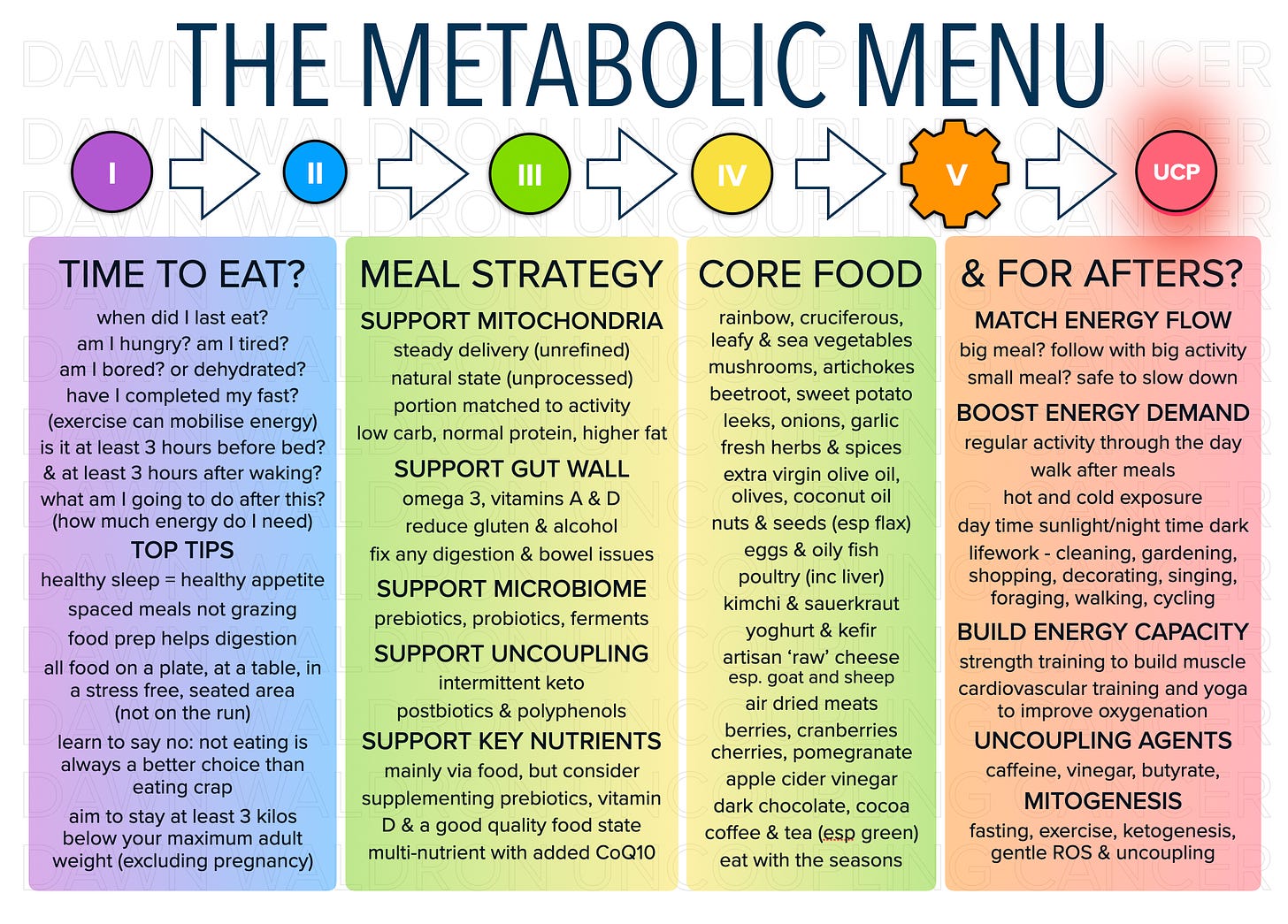
There is a wider discussion of dietary aims and objectives in the rest of this post.
THE FLUXABLE METABOLISM
The diet is best described as an intermittent ketogenic diet, although it does have a much wider remit than simply burning ketones. Like any diet, the rules are made to be bent and broken to suit your own personal requirements; you may need to invest some time working out what suits you and adapting the diet to fit in with your health and lifestyle.
Please forget everything you may have read about the ketogenic diet online, both positive and negative. The ketogenic diet is a high fat diet, but it’s not a high calorie diet. The aim is to eat a normal amount of calories but to get more of those calories from fatty foods. I understand this is an anathema to most of us (especially those of us with long term weight issues) who have been brought up to think fat is bad. But fats are an important part of the diet and they carry essential nutrients with them. Moreover, they are the only one of the three macronutrients (carbohydrate, protein, fats) that does not elicit an insulin response.
Keeping insulin levels low most of the time is the key to any longevity focussed diet – it’s the best way to promote healing, repair and longevity. I’m going to be brutally honest trying to keep your insulin low in the world we live in takes some willpower and commitment – you may well feel like an outlier and find that widely available foods are off limits. That can make snacking or eating on the run difficult. But when you start to understand the healing benefits of maintaining a low calorie/fasting environment you may well begin to see that as a bonus.
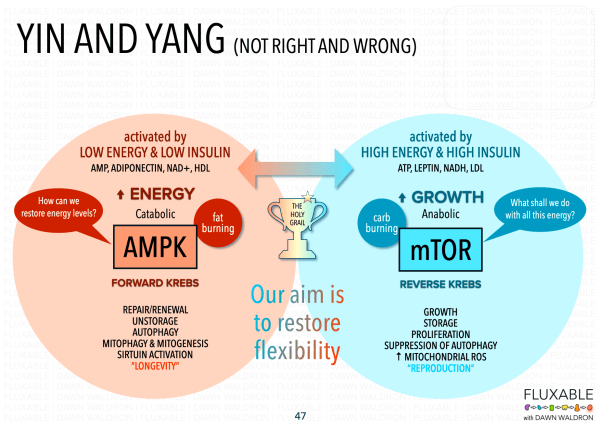
It’s not that we need to be in fasting state 24/7 but ideally we need to be in this state for between thirteen and sixteen hours every day, repeatedly flipping the metabolic switch. When we overeat, especially when we consume too much sugar and starch, the blue state dominates our days, promoting growth and proliferation rather than healing and repair.
THE FLUXABLE GUT
No matter what diet you choose to follow in your quest to keep cancer at bay, it’s imperative that it includes adequate nourishment for your microbiome. It really is impossible to overstate the importance of this ‘organ of immunity’ that also extends our genetic and metabolic capabilities. We really need these microbes on our side – and you can’t do that with a spoonful of yoghurt and a probiotic.
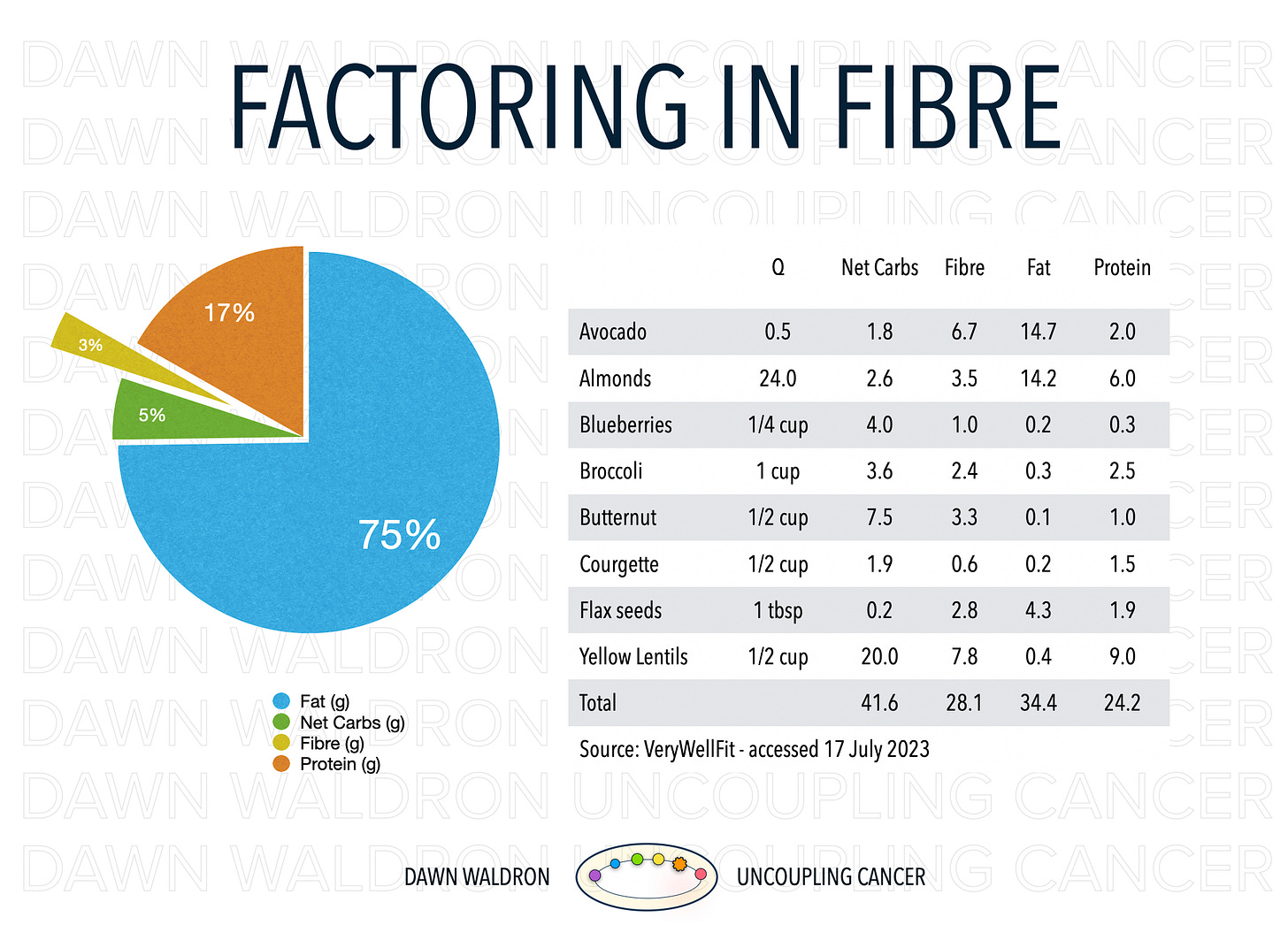
Plant foods are at the heart of the FLUXABLE diet: supporting gut health, assisting with polyphenol bioavailability and boosting thermogenic uncoupling. The key is to minimise plant-based sugars and starches by focussing on ‘above-ground’ vegetables and fruits that grow in northerly climes, such as berries and apples. I have highlighted some of the best sources of fibre below. You may also want to include a prebiotic powder in your daily diet, to boost your overall dietary fibre intake; it can also be a useful way to add a little sweetness without increasing insulin levels. Eating fermented foods, like kimchi, provides important polyamines that fill some of the gaps in our microbial colonies and helps the microbiome to work holistically
FLUXABLE FUEL
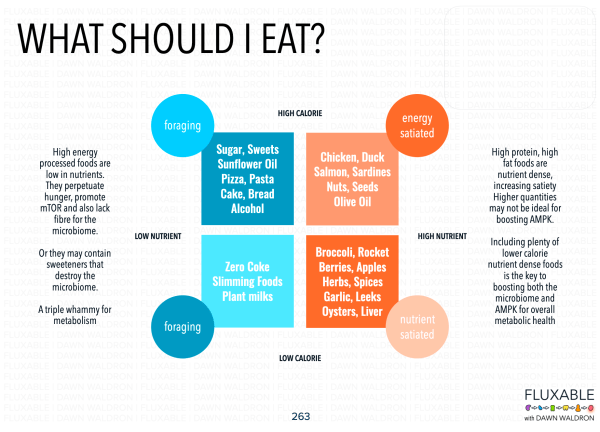
Eating for health is not just about fats vs carbs, the idea is also to prioritise ‘nutrient dense’ foods. Nutritionists tend to focus on nutritional deficiencies, and there is a lot of emphasis on supplementation, especially after cancer. But if you choose ‘real’ food, it’s much easier to get the nutrition you need. A lunch of chicken, avocado, rocket and tomato is bursting with nutrients compared with a cheese sandwich. Eating well is about making every calorie count by ensuring it is loaded with high quality nutrients. You are aiming for a plate that contains plenty of high quality protein, lots of ‘above ground’ vegetables, and enough healthy fat to meet your energy requirements.
If you are a keen macro follower, then the split for the diet is:
- 5% carbohydrate – mainly from vegetables and a little fruit
- 15% protein – from a diverse range – eggs, tofu, fish, seafood, game, meat
- 80% fat – from a range of sources – nuts, seeds, olive oil, butter, cheese, avocadoMost people find that they need to start off with around 25g to 40g of carbohydrate per day to achieve ketosis. This may increase as you become keto-adapted.
FLUXABLE FOR LIFE
I have found the diet to be very flexible, even on holiday. It’s not difficult to enjoy a meal out with, say, fish (or steak), and salad, and a glass of wine. Cheese can be just as delicious as dessert. But obviously there will be times when you want to eat foods that are not on the list. Just remember it’s better to break the rules ‘big style’ once a week, than just a little bit once a day.
The nutrition science is very clear, carbs and fats don’t play nicely together. You can be very healthy on a low carb diet with higher levels of fat, but if your resolve starts slipping and you allowing sugars and starches on your plate at the same time as higher levels of fat you are playing with fire. If, in the long term, you decide to introduce a ‘normal’ amount of carbs back into your diet then it’s vitally important that you reduce your fat intake. A high fat, high carb diet is not healthy for anyone.
It’s easy to follow this diet and eat delicious food for the rest of your life, but you are going to have to learn how to cook for yourself. Don’t buy into the marketing myth that you’re too busy to cook: most nights I prep and dish up dinner within 45 minutes, often less than that. I use that time to listen to my favourite podcasts or soundtracks, and generally to put a mindful gap between my day and my evening. It has become a sacred space that I miss if it doesn’t happen. There are loads of recipes that will help you work within the food lists under the Power Plates menu, here on the blog.
GETTING YOUR FLUX ON
If you are a recent convert to healthy eating Your cells may be reluctant to burn fats after so many years of being fuelled by carbohydrate: they (and you) need time to adjust. For the first six weeks (though this can need longer for those of us who are more metabolically challenged) please follow the diet strictly, keeping carbs as low as possible, to allow your body to become ‘keto-adapted’. You can build in more flexibility later but it’s harder to achieve metabolic flexibility if you’re half-hearted about it at the beginning.
Many people feel rough for a couple of days when they cut out unhealthy carbs. This phase is commonly called ‘keto flux’ and it tends to happen about four days after you stop eating sugar and starch. There’s a good reason for this: it means you have depleted. your sugar stores (great news for Fluxability) and also begun to rebuild your microbiome in favour of the organisms that thrive on healthy food. It’s uncomfortable, sure, and you may experience strong cravings, but hang on in there because on day five or six you’ll wake up with more energy than you’ve had for years. Just make sure you are eating LOTS of low carb vegetables to keep your bowel working well, eliminating all those unwanted bacteria that are no longer welcome. Almost everyone will lose 3-6 kg during this phase of the diet as glycogen is depleted – this is not fat loss, just water loss, so don’t panic.
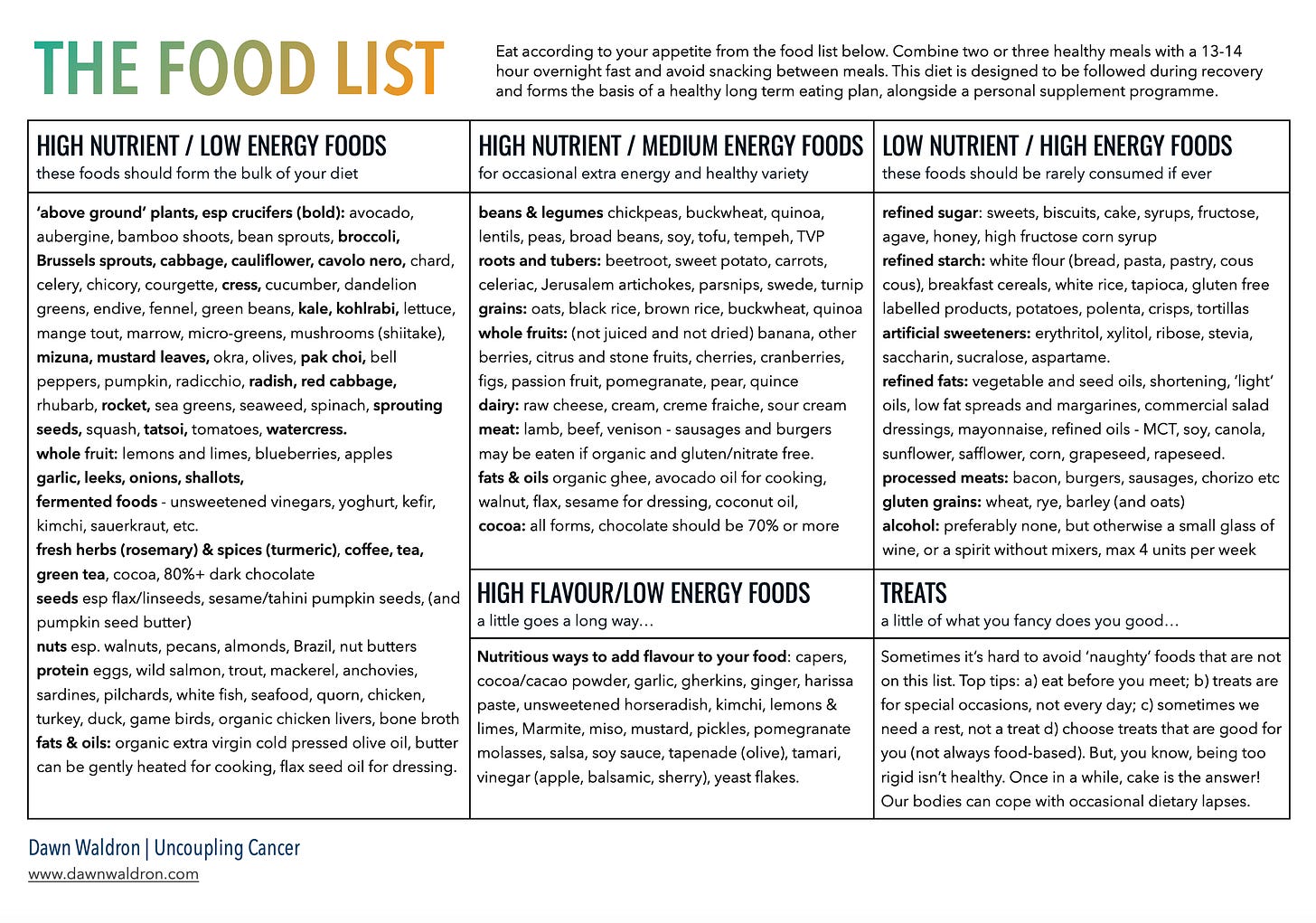
For the first two weeks I suggest focussing on the first column only, gradually increasing your food choices to include the second column and doing your best to avoid the third column most of the time.
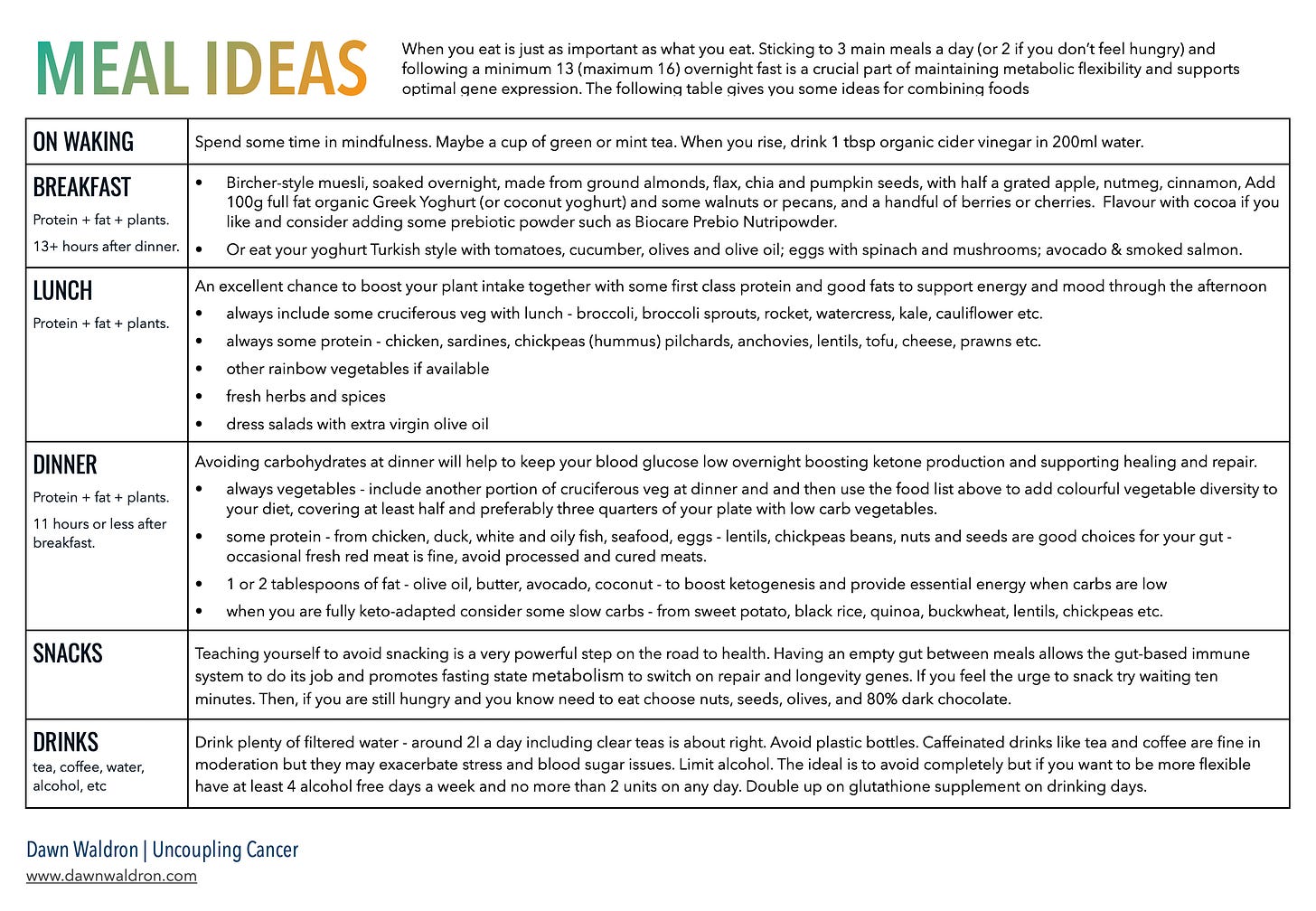
When you’ve completed the first two weeks allow yourself one day a week to be more flexible. Remember also to think about the timing and quantities of what you eat so that you are not overeating in any one meal, and spending at least thirteen hours of each day in fasting mode. In time you’ll settle in to a new rhythm and a new understanding of your own body.
The aim is to be in ketosis for six days out of seven. Long term – say six months on – you should be able to include some foods from the middle column on most days – you can use ketone testing to monitor how your body copes with this.
FLUXABLE FASTING
You can further empower your metabolism by following a 14 hour overnight fast each day, eating an early dinner and managing your meal sizes so that you are properly hungry between meals. Combining ketogenic eating with intermittent fasting is a very powerful way to boost metabolic health and support longevity pathways. It is also an excellent way to support yourself throughout cancer treatment.
Depending on your personal metabolic needs you can switch in and out of this stricter/looser way of eating for the rest of your life, flexing around holidays and weddings, summer and winter, to give your body a powerful metabolic foundation.
FLUXABLE TREATS
In three to six months your metabolism should be highly flexible and you should also be able to bend the rules on day seven to allow yourself more leeway with social occasions. Don’t be tempted however to abandon you diet for more than 24 hours. Getting ‘back on the wagon’ can be difficult.
One of the problems with social eating is that the word ‘treat’ tends to be associated with unhealthy things rather than healthy ones. If you think about it, that’s a bit strange. Why do we treat ourselves with things that are bad for us?
Sometimes it can be helpful to reflect on our food habits. Are you in a social group that makes it difficult to be healthy? Do you have an inherited/family pattern of eating foods together that are not good for you? Are you using food as a form of compensation for things in your life that need to change? Could you have a treat cinema trip rather than a treat meal? Do you need a rest more than you need a sugary snack? Could you meet your friend for a walk, rather than for coffee and cake? Has cooking become your only means of self-expression and self love?
I’m not trying to be a killjoy, rather I’m trying to widen your experience of the good things in life, and just check that you’re not using food and drink as your main source of pleasure when there is so much more to life.
FLUXABLE FREEDOM
Having said all that, I really don’t want to leave you with the impression that food is the be-all-and-end-all of health. There is so much more to it than that. Ideally, you’ll get the hang of this diet and then incorporate it effortlessly into ‘normal’ life. There’s no measuring and no difficult ingredients to deal with – just food.
If there’s one thing we can take away from the concept of ‘metabolic flexibility’ it’s that being rigid isn’t healthy. Survival doesn’t mean wrapping yourself in cotton wool and being perfect for the rest of your life. Of course, sometimes, you just want to throw caution to the winds and have a glass or two of champagne, or a slice of pizza and enjoy the moment. Once in a while, cake is the answer! Our bodies can cope with occasional dietary lapses. Ancient Ayurvedic tradition states that food prepared with love cannot be bad for you!

 DAWN WALDRON
You must be logged in to post a comment.